How to Optimize Your Website for Google’s New E-E-A-T Standards
Imagine landing on a website that looks perfect. Stunning design, catchy headlines, all the right keywords, yet something feels off. You scroll, but you don’t trust it. You are not alone.
Google feels the same way. That is why its new E-E-A-T standards are reshaping how websites earn trust and visibility.
Expertise, Experience, Authoritativeness, and Trustworthiness. If your site does not reflect real experience, credibility, and authenticity, it could quietly slip down the rankings, no matter how polished it looks.
So, how do you convince both Google and your audience that you are the real deal? Let’s dive into how you can optimize your website to not just meet, but master, the new E-E-A-T era of search.
Understanding what E-E-A-T really means
Before diving into strategies, it is crucial to truly understand what E-E-A-T stands for and why it matters. Google added the extra E for Experience to emphasize the real-world know-how.
It is no longer enough to sound like an expert. You need to show that you have been there, done that, and learned from it.
For clients looking for SEO services for web design, would you rather trust a random copywriter or a specialist who has successfully optimized websites and boosted their search rankings? Google thinks the same way.
So, optimizing for E-E-A-T is to prove your authenticity. Your site should feel like it is written by someone who genuinely knows and cares about the topic.
This is what separates credible brands from the ones that fade into digital noise.
What does Google E-E-A-T stand for?
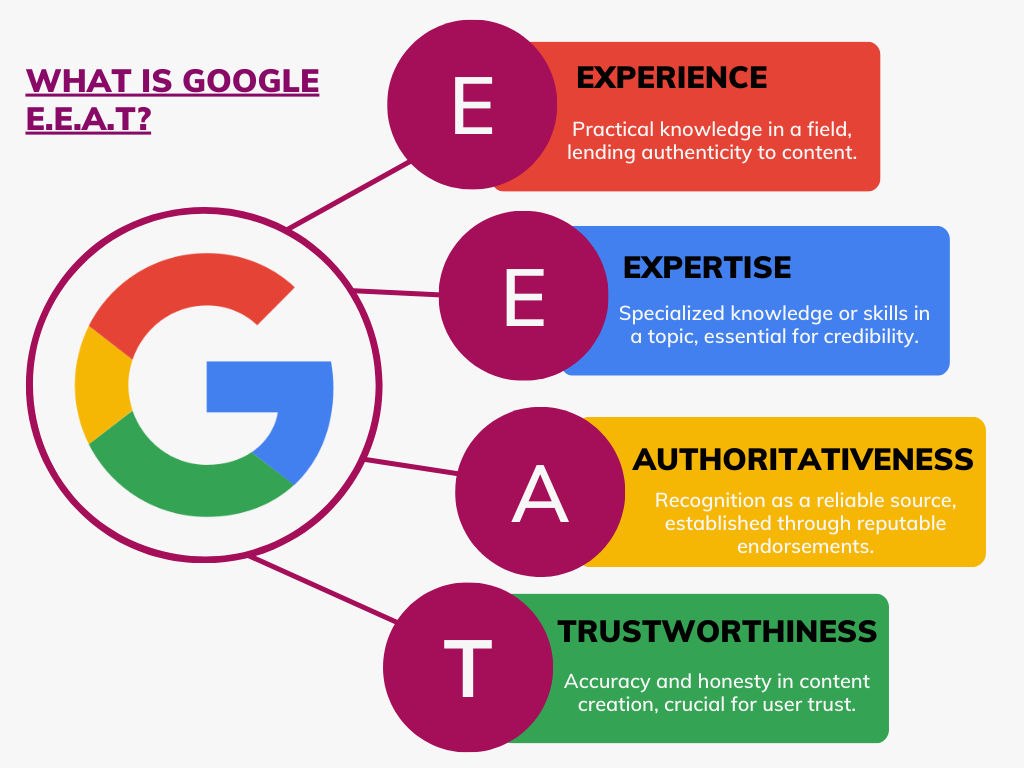
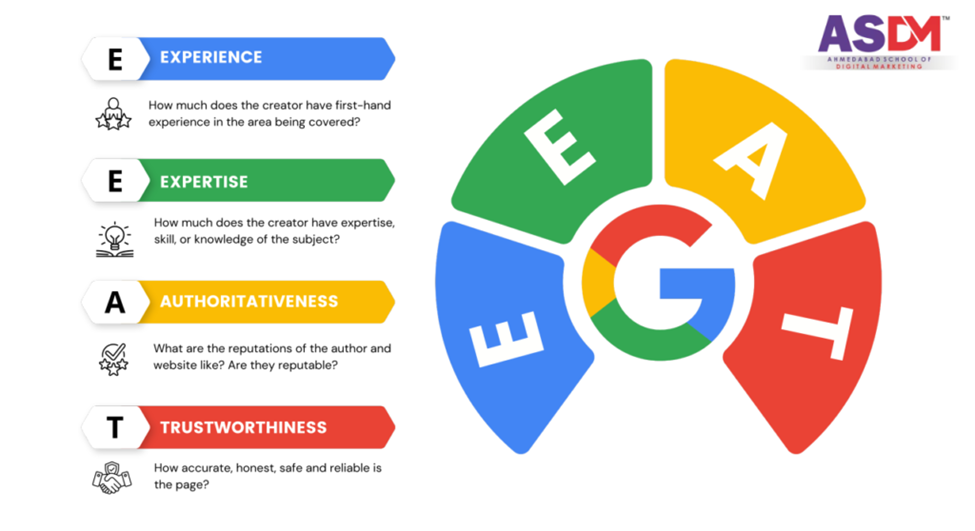
Google E-E-A-T stands for Experience, Expertise, Authoritativeness, and Trustworthiness.
Here is what each part means in simple terms.
- Experience: Shows that the creator has firsthand experience with the topic. For example, a travel blogger who’s actually visited the destination they’re writing about.
- Expertise: Demonstrates the creator’s knowledge or skill in the subject. Think of a certified nutritionist writing about healthy eating.
- Authoritativeness: Reflects how credible you or your website is within your industry. Are others referencing your content? Do trusted sites link back to you?
- Trustworthiness: The foundation of it all. It’s about being honest, transparent, and reliable. This includes accurate information, secure websites (HTTPS), clear authorship, and genuine user experiences.
Together, these four elements help Google determine whether your content deserves to rank higher, not just for how well it is written, but for how credible and real it is.
Why is E-E-A-T important for SEO?
E-E-A-T is important for SEO because it helps Google decide which content truly deserves to rank at the top, not just which one uses the right keywords. It is Google’s way of ensuring users get accurate, reliable, and experience-backed information every time they search.
Here is why it matters so much:
1. It builds trust with both Google and users
When your website consistently shows experience, expertise, and authority, visitors are more likely to trust you, and Google recognizes that. Trust signals like real author bios, quality backlinks, and transparent content help your site appear more credible.
2. It improves your chances of ranking higher
Google’s algorithm now favors content that aligns with E-E-A-T principles. Even if your SEO tactics are strong, weak credibility or a lack of real experience can hurt your visibility. Strong E-E-A-T, on the other hand, tells Google your content deserves to rank.
3. It enhances user experience and conversions
People want to learn from real voices, not faceless websites. When visitors feel your content is authentic and helpful, they stay longer, engage more, and are more likely to return or buy, all of which boost your SEO metrics.
Showcase real experience
Google’s focus on Experience means your content should come from people who have actually lived or practiced what they are writing about. It is no longer about filling pages with research and stats alone. It is about blending that with a real-life perspective.
Share personal insights, case studies, or behind-the-scenes details that reflect firsthand knowledge. For example, if you are a fitness coach, include snippets from your client transformations or lessons from your own fitness journey.
If you are in e-commerce, talk about challenges you faced in sourcing materials or improving customer experience. These real touches show both users and Google that your voice comes from experience, not theory.
Build your authority over time
When your content consistently provides value and gets recognized by others in your field, Google takes note. That is what building authority is: a long-term game that starts with producing high-quality, reference-worthy content.
For a full-service digital agency, this means showcasing expertise through guest blogging on reputable sites, earning backlinks, collaborating with industry experts, or being cited in credible sources.
Guest blogging on reputable sites, earning backlinks, collaborating with known experts, or being cited in credible sources all build your website’s authority. The more your brand name appears in trustworthy spaces, the more weight Google and your audience will give your words.
The more people talk positively about you in the right circles, the more influential you become. Digital authority works exactly the same way.
Strengthen trust through transparency
Trust is the backbone of E-E-A-T. Without it, even the well-written or expert-level content won’t perform well. People want to know who they are getting information from and why they should believe you.
Be transparent about your sources, credentials, and intentions. Include clear contact information, show your business’s real address, and display social proof such as testimonials, reviews, or certifications.
Simple things like secure payment gateways, privacy policies, and up-to-date about pages also go a long way in signaling reliability.
Optimize content for humans first, Google second
Gone are the days of stuffing keywords into every paragraph. Today, Google’s E-E-A-T drive algorithm prioritizes content that actually helps users. That means writing naturally, answering real questions, and offering solutions in an engaging, easy-to-read way.
Use simple language, conversational tone, and visuals to make your content digestible. Organize it with clear headings, short paragraphs, and examples that keep readers hooked. When you create value-driven content, keywords and ranking naturally follow.
Your goal? To make a reader feel like they are talking to someone who gets it, not reading a robotic info dump.
Keep your content fresh and updated
Even the most authoritative content loses value if it goes stale. Google favors websites that stay active and relevant. Regularly update your articles, refresh statistics, and revisit older pages to ensure accuracy.
Add new insights, update visuals, and tweak information to reflect the latest trends or data. This tells Google that your site is alive and dependable, a trusted source worth sending users to. Plus, it shows your audience that you are committed to delivering current, high-quality information.
Frequently asked questions
What does the “extra E” in Google’s updated E-E-A-T acronym specifically refer to?
It stands for Experience. Showing firsthand, real-world knowledge, not just researched expertise.
What are three actionable ways to demonstrate Expertise and Experience directly on a service page or blog post?
Include author bios and credentials.
Share case studies or personal examples.
Add photos, videos, or tutorials showing real-world work.
How does a website’s backlink profile relate to improving its Authority and Trust signals?
High-quality backlinks act as votes of confidence, signaling credibility and authority to Google.
What website sections or pages should be immediately updated to align with E-E-A-T guidelines?
About & Team pages – show expertise.
Service pages & blogs – include firsthand insights.
Contact & Legal pages – clear info and policies.
Testimonials & Case Studies – show real results.
Is E-E-A-T a direct ranking factor, and how do Google’s Quality Raters use these standards?
No, it is not a direct ranking factor. Quality Raters use it to evaluate content reliability, which helps Google refine its algorithm.
Final thoughts
Optimizing for Google’s E-E-A-T helps you become genuinely valuable online. It is about blending expertise with real-world experience, building authority through integrity, and earning trust through transparency.
So before your next blog post or website update, ask yourself, Does this piece of content sound like it was written by someone who has truly lived it? If the answer is yes, then you are optimizing Google and building a brand people believe in.

I am a digital strategist and UX enthusiast based in Ireland, specializing in high-conversion web design and SEO. I write engaging blogs and articles for entrepreneurs looking to turn their websites into high-performing business engines. From Shopify optimization to the latest AI-driven design trends, I provide data-backed guides to help local businesses thrive in an increasingly digital-first economy.